
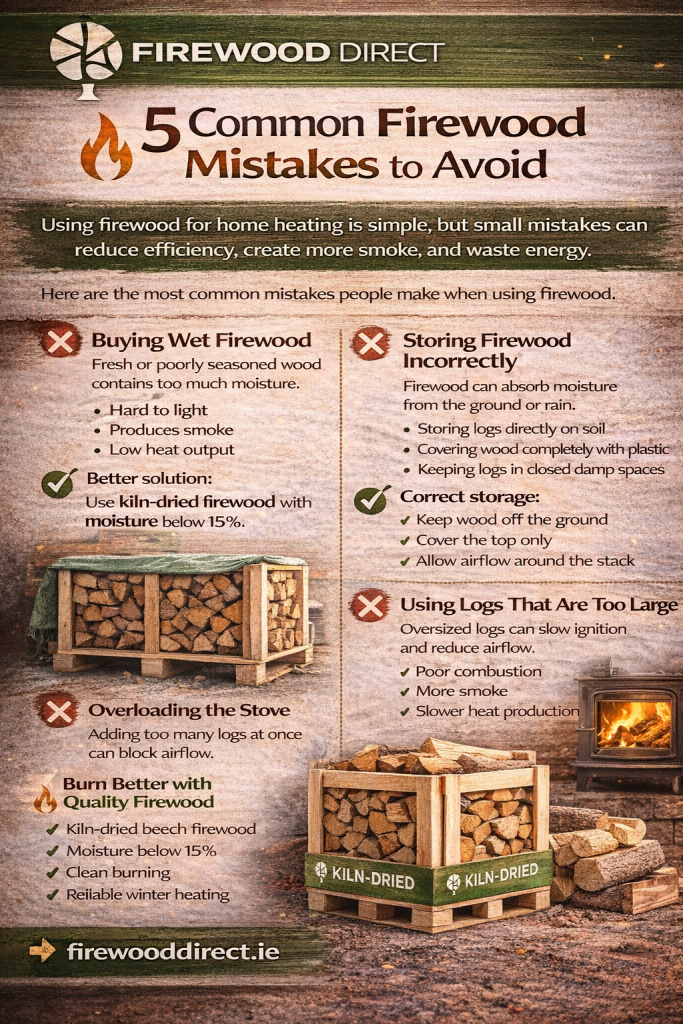
Using firewood for home heating is one of the most natural and reliable ways to keep a house warm. However, many people unknowingly make small mistakes when buying, storing or burning logs.
These mistakes can reduce heat output, increase smoke and even damage your stove or chimney over time.
Here are five of the most common firewood mistakes and how to avoid them.
1. Buying Wet or Poorly Seasoned Logs
One of the most common problems is purchasing firewood that contains too much moisture.
Freshly cut wood can contain 40–60% moisture, which means a large amount of energy is wasted evaporating water instead of producing heat.
Wet logs often causes:
- Difficult ignition
- Excessive smoke
- Low heat output
- Soot buildup in the chimney
The best solution is to use kiln-dried logs with moisture below 15%, which burns cleaner and produces stronger heat.
2. Storing Firewood Incorrectly
Even high-quality logs can absorb moisture if stored improperly.
Common storage mistakes include:
- Placing wood directly on the ground
- Covering the entire stack with plastic
- Storing wood in a closed, damp space
The correct way to store logs is:
✔ Keep it off the ground
✔ Cover the top but leave sides open
✔ Store in a ventilated area
Proper airflow helps maintain dry, ready-to-burn logs.
3. Using Logs That Are Too Large
Large logs may look impressive, but they are often difficult to ignite and slow to burn properly.
Oversized pieces can:
- Reduce airflow in the stove
- Delay proper combustion
- Produce more smoke during ignition
For best results, use properly split logs that fit comfortably inside your stove or fireplace.
4. Overloading the Stove
Adding too many logs at once can reduce combustion efficiency.
When the stove is overloaded:
- Airflow becomes restricted
- The fire burns inefficiently
- Smoke production increases
Instead, add firewood gradually and allow the fire to burn steadily.
A well-balanced fire produces better heat and keeps the stove operating efficiently.
5. Burning the Wrong Type of Wood
Not all wood burns the same way.
Softwood may burn quickly and produce less consistent heat, while hardwoods tend to burn longer and hotter.
Hardwoods such as beech are particularly popular because they provide:
✔ Long-lasting heat
✔ Clean burning
✔ Consistent performance
When kiln-dried, hardwood becomes one of the most efficient fuels for stoves and fireplaces. https://en.wikipedia.org/wiki/Beech
Better Fire Starts with Better Firewood
Avoiding these simple mistakes can make a significant difference in heating efficiency, comfort and stove maintenance.
Using properly prepared firewood ensures:
- Strong heat output
- Cleaner combustion
- Less ash and smoke
- Reliable winter heating
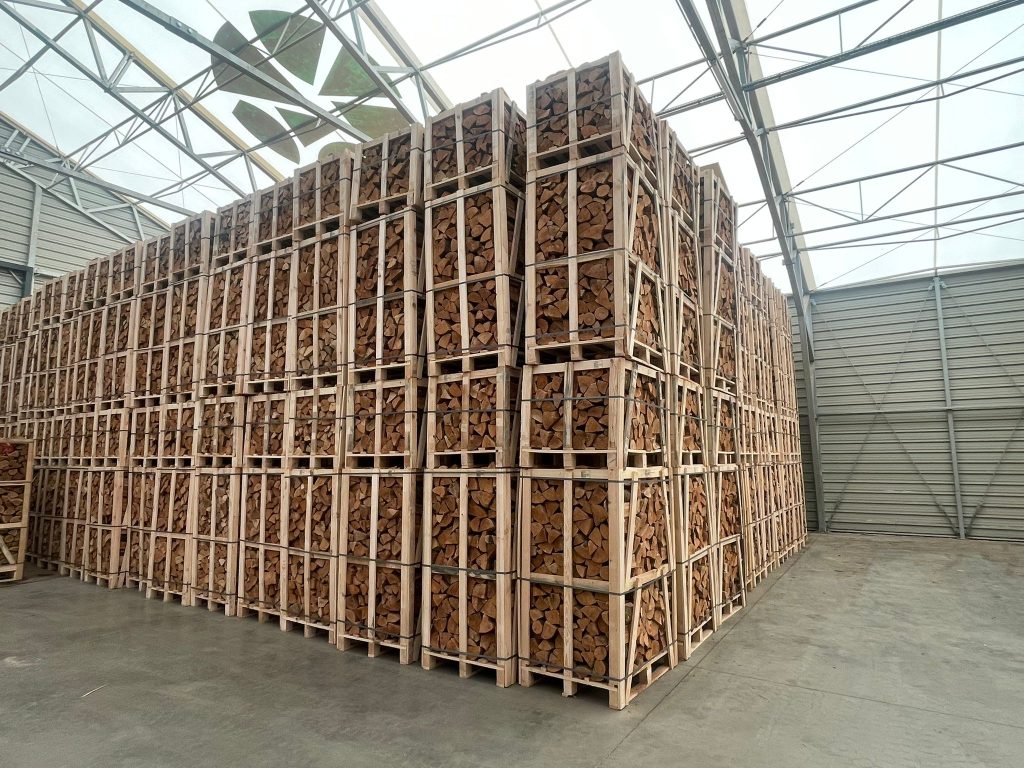
At Firewood Direct https://firewooddirect.ie/ , we focus on delivering kiln-dried beech firewood with moisture below 15%, carefully packed in solid crates and ready to burn.
Choosing the right firewood and using it correctly ensures your fireplace or stove performs at its best.